


While some companies pour millions into flashy ChatGPT demos and get zero results, others are already making millions from AI agents. Why do 95% of corporate AI projects fail — and how can you join the successful 5%? Let’s unpack MIT data, real-world cases, and how agentic systems with memory and learning are changing the rules of the game.

Most companies today have a small graveyard of AI projects. Somewhere deep in Confluence lie slides for the “smart employee assistant,” “customer chatbot,” or “contract analysis AI” — all once promising, all quietly abandoned after the pilot.
And this isn’t just an impression; it’s backed by data. Despite tens of billions of dollars invested in generative AI, 95% of organizations see no measurable return from their projects. MIT’s Project NANDA report found that only 5% of integrated pilots generate millions in profit, while the rest never reach P&L impact. The gap is so pronounced it’s earned its own name — the GenAI Divide: some companies turn AI into an operational advantage, while others turn it into an expensive toy.
At first glance, the picture looks promising. Over 80% of organizations are already experimenting with ChatGPT, Copilot, and similar tools, and nearly 40% claim they’ve started deployment. On PowerPoint, it all sounds like “we’re already in AI.”
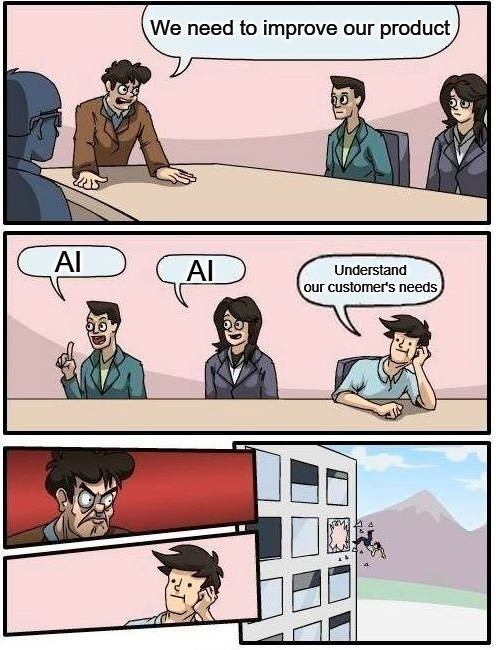
Wrong answer in 2025
But when it comes to custom enterprise-grade solutions, the numbers collapse:
Meanwhile, the AI agent market is booming — from $5.32B in 2025 to a projected $42.7B by 2030 (CAGR 41.5%). Already, 79% of organizations use AI agents in some form, and 90% plan to expand usage.
Those who’ve crossed the divide tell a different story:
So the question isn’t whether AI works — it does.
The real question is why it works for so few, and fails for everyone else.
MIT identifies the key barrier as the “learning gap.” Most corporate GenAI systems don’t retain feedback, don’t accumulate knowledge, and don’t improve over time. Every query is treated as if it’s the first one.
That’s why we see a curious paradox. The same professionals who use ChatGPT daily for personal tasks are skeptical of corporate AI tools.
The reason is simple. ChatGPT is great for a one-off brainstorming session:
But it doesn’t remember how your team edits contracts, what risks matter most, or how your salespeople actually talk to clients. As one corporate lawyer put it:
It’s perfect for a first draft — but for critical work, I need a system that learns from our cases, not one that starts from scratch every time.
Among the top barriers to AI scale-up, the first is user resistance, and the second is poor output quality. The issue isn’t that LLMs are weak — it’s that they’re stripped of memory, context, and learning mechanisms. Add to that poor UX, weak executive sponsorship, and the usual chaos of change management.
MIT’s data shows another key pattern:
Adoption rates for vendor-built tools are nearly twice as high — not because vendors are smarter, but because their systems are built for scalability, not showy pilots.
Another blind spot: budgets. Around 50% of GenAI spending goes to sales and marketing — demos, slides, “innovation showcases.” Yet the biggest ROI comes from automating the back office:
Take Air India’s virtual assistant, which automatically handles 97% of over 4 million customer queries — saving millions in support costs. Not a flashy demo, but a high-impact, quietly revolutionary system.
The takeaway: it’s not AI projects that fail — it’s the “build a demo and we’ll figure it out later” approach. Winners build learning systems embedded in real workflows from day one.
The way forward is clear: a shift from “chatting with a model” to agentic AI — systems designed with built-in memory and continuous learning.
Instead of “send full context, get an answer,” agentic systems:
We’re already seeing this in action:
This evolution is powered by new infrastructure:
MCP standardizes how applications expose structured data and tools to LLMs, while A2A defines how agents communicate, share state, and coordinate actions.
In practice, one agent might use MCP to gather internal data, then pass results via A2A to another agent for execution — forming an Agentic Web: a coordination layer over existing systems, replacing monolithic “super apps.”
Analysts expect the AI agent market to grow from $5.4B in 2024 to between $50.3B and $105.6B by 2030–2034, with 40% of enterprise apps including task-specific AI agents by the end of 2026.
MIT’s warning is blunt: the next 18 months will determine which side of the divide your company lands on. Enterprises are locking in vendor relationships — and the more a system learns from your data, the harder it becomes to switch.
A CIO of a $5B financial company put it plainly:
We’re evaluating five GenAI solutions. The one that best learns our processes will win our business. Once a system has spent months understanding our workflows, switching becomes nearly impossible.
Every week without an agentic AI strategy isn’t just lost opportunity — it’s growing technical and organizational debt.
This is where platform choice becomes critical. You need a tool that lets you launch agents fast — without forcing a painful migration once your pilot takes off.
Enter Directual — a full-stack no-code platform engineered for scale, not prototypes. While most no-code tools hit their ceiling early, Directual was built the other way around — from production-grade capacity down to MVPs.
What makes Directual ideal for AI agents:
The key point: you don’t have to switch platforms when your first agent succeeds. Directual grows with your product — from pilot to full agentic ecosystem.
MIT’s research outlines a clear path for those ready to cross the GenAI Divide. Translated from consulting jargon, it boils down to this:
The GenAI Divide isn’t fate. It’s a consequence of architecture and execution. But the window of opportunity is shrinking fast. Those building systems with memory, learning, and autonomy today will dominate the post-pilot AI economy tomorrow.
Ready to build your first AI agent?
We at Directual created a free AI Agents Course to get you from idea to production system faster!
No code — but with real logic, integrations, and memory. The things that separate the 5% of success stories from the rest.
The window is open. The question is whether your company will step through — or settle for another pretty demo.