
Is customer support AI a dud or something you can confidently introduce into your workflows? See the answers within.

AI is getting introduced into customer service to make things easier for agents and not so terrible for customers. You've got your usual suspects like ticket sorters and chatbots—think of that chatbot at your favorite burger joint that knows exactly what greasy goodness you’re going to order. But really, that’s barely scratching the surface.
There’s a truckload of ways to throw AI into the mix at call centers, on shopping sites, and all over the sales process. The AI world is blowing up fast, and customer service is just trying to keep pace. By the time you get through this, I’ll probably be deep into writing some new piece titled “AI in customer service: Even more ways to automate support that I didn’t know existed a few weeks ago.”
So, here are a couple of tricks companies are pulling with AI to keep their customer service from being awfully bad.
Customer service AI is meant to help both the company and the customers. Here’s how it works:
Agents get fewer tickets because AI lets customers solve simple problems themselves. This cuts down on boring, repetitive tasks, freeing up agents for more complex issues. Companies save money as they grow by using software to handle customer demands instead of hiring more people. AI also crunches huge data sets to provide insights that help predict customer needs and manage inventory.
For customers, the perks include faster solutions. A good AI setup means they might not even realize they're not talking to a human, but they get their problems solved quicker. AI improves the customer experience, keeps it consistent, and often results in lower costs. Less spent on overhead this way.
AI isn't perfect and it comes with its own set of challenges, but many of these might diminish as the technology evolves. One significant concern is privacy. There are valid worries about how sensitive user data is anonymized, especially as AI processes large volumes of information.
Another issue is long-term system maintenance. The world of AI is constantly shifting, which means maintaining these systems over the long haul can become complex.
Implementing AI systems also comes with hurdles. It can be tricky to set up, and companies should brace for a process that could be lengthy—much trial and error before the systems function well.
And, there may be resistance from current team members. Adapting to new technologies often requires extra training, and some employees might resist altering established workflows. For starters, anyway.
Despite the doomsday scenarios painted by the media and sci-fi about AI, it's not about to replace customer service teams completely. In reality, most companies use AI to support, not substitute, their human agents. AI helps to save time and make things easier. Here’s how:
Still not sure what AI can do for your customer support agents, campaigns, and workflows? Here are some of my favorite customer service AI use cases.
Chatbots are everywhere in customer service, probably what you bump into most of the time. They're not exactly there to kick out human support, but more like to give agents a break. These bots can spit out pre-set answers or dig up stuff from manuals, websites, or old chats.
If stuff like this makes up half of all the support tickets a company gets, that’s a big deal for saving time for the agents. For trickier questions, chatbots just hand off customers to real agents. Only the tough or important issues are handled by us mere mortals this way.
Sometimes you’ve got to let people sort things out on their own. Chatbots aren’t just there to spit out answers; they can get pretty smart and suggest moves based on what you’ve been clicking around on the site or what other users have been asking about lately. If a lot of people are clicking or searching the same stuff, like a certain product, chatbots can jump in with links to what you’re probably looking for.
This is also a smart move for businesses to throw products or services at people who might actually buy them.
AI support ticket sorting uses stuff like natural language processing and sentiment analysis to add tags and labels on tickets automatically and send them to the right agent and support phase. Using AI to handle this has a couple of big perks over doing it by hand: it slashes the time agents waste on boring, minor tasks, and it helps companies boost up their support as they get bigger.
AI gets smarter as it goes, tweaking how it works based on what it learns. So, as the ways to fix problems evolve, AI ticketing can adjust its sorting and tagging game.
AI can sort through what users are saying about a business, using all that chatter to whip up reports that help improve customer service. It crunches everything from private surveys to public reviews and tweets, doing sentiment analysis way faster than any person could.
Sure, it won't chat with customers directly or fix their issues on the spot, but it's still pretty handy for spotting where customers keep running into trouble. With this kind of info in hand, you can tweak how things are done, cook up new self-help options, or better equip your staff to deal with the problems.
What works for you probably works for your rivals too, and the other way around. You can use opinion mining to check out what people are saying about your competitors.
This AI sentiment analysis sorts through stuff like the vibe of mentions, gripes in bad reviews, and what folks praise in the good ones. Are people really ticked off about long waits? Do they dig real human contact? Are messy return policies pushing them to shop elsewhere? Pull all this info together, and spot why customers are flocking to or fleeing from their competitors based on how they handle service.
For companies that serve customers worldwide, being able to help them in different languages is a huge deal. Not every business can have customer service people who speak every language, but using AI tools to translate stuff can really help.
These tools can figure out what language someone is using and translate messages back and forth between the customer and the support team. They even use smart translation technology to adjust how things are said based on where the customer is from and local ways of talking.
They can handle spoken language, too. Sure, these AI translators can’t handle every language out there just yet—they usually work with several dozen—but they’re getting better all the time.
Helping customers really helps businesses too—it's a win-win, you know? Using machine learning, online sellers can give their customers a nicer, more tailored shopping experience that makes buying stuff simpler and keeps them coming back for more.
If you look at the whole picture of a customer’s profile, like where they're from, what they've bought before, what they've looked at but not bought, how they browse, and what they search for, they can learn a lot.
With machine learning crunching all this info about different customers, you can then send out really spot-on recommendations, special deals at just the right time, or even just check in to see if the customer needs anything.
If you’ve ever tried to buy something that was out of stock or found out something you ordered is delayed, you know how important keeping track of inventory is to customer service.
Good inventory management means keeping things in stock so customers don’t even have to ask about it. Machine learning and AI-driven predictive analytics can really help you keep just the right amount of stock—not too much, not too little.
AI looks at how much stuff you have, how things are moving, and past sales to make smart guesses about what will be needed soon. It can even adjust how much stock is kept based on those guesses, making sure things are available when needed without overdoing it.
If there’s an extra level of hell, it’s probably stuck waiting forever to talk to customer service.
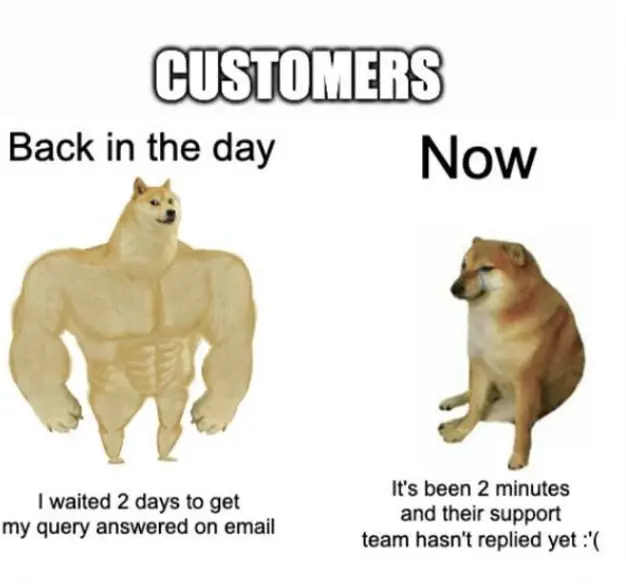
Telling customers how long they’ll have to wait for help can make a huge difference. It could turn a frustrating experience into a problem solved—or at least keep them from just quitting and leaving a bad review. AI can look back at all the old chats and help tickets, match them to how things are sorted out now, and then figure out how long each wait might be.
It considers things like the kind of problem, which agent is on, and how busy they are. This doesn’t fix the problems right away, but it helps manage people’s expectations and keeps them from getting too upset.
Agents have a bunch of tools to help them solve customer issues, and AI can bulk up that toolkit. AI can look at stuff like what kind of problem it is, how things got fixed before, and how customers have acted in the past, and suggest what to do next.
Agents get a list of smart options they might take. They might not always pick the right one, and sometimes they might already have a good idea of what to do, but the cool thing is, if the AI’s suggestions aren’t helpful, agents can just ignore them.
This should provide you with a starting point:
Let's start with the no-brainer. AI help desk software is your golden ticket to ditching the human factor in basic support roles. Grab an add-on from your buddy Zendesk and thank yourself later.
This stuff is the Swiss Army knife of AI. Use tools like ChatGPT and Claude if you need to churn out emails or translate demands without breaking a sweat.
Hooked on CRM? Good. Many (like Salesforce) come juiced-up with AI tools that mesh with your support antics, so you can stop doing everything the hard way.
Meet the heavy hitters—Cortana, Google Assistant, Microsoft Copilot. These bad boys are here to back your team up, serving quick fixes on a silver platter so your real humans can do less Googling and more solving.
The best thing: you can build your own chatbots and offer customer support over messengers like WhatsApp and Telegram. It’s super easy to get started and that’s where your users are.
Why no Telegram to start with? Telegram bots are handy for a ton of stuff—alerts, info updates, and even games. Creating your own Telegram bot isn’t rocket science, even if you can’t code to save your life. Here’s how you can do it without touching a single line of code.
Despite some legal drama and a few bans, it's thriving with almost a billion users. You just type a command, and your Telegram bot jumps into action. Even better, you can create these bots with no-code platforms like Directual. Mix in ChatGPT, and you win.
Here's the breakdown of how to do that:
Got a bot now and want to tweak it? Easy.
Editing your bot can be a blast but might require some technical chops. If you're stuck, hit up Telegram’s official docs for help.
Assuming you've got a Telegram bot ready, let’s connect it to Directual:
There you go! Last step, is marrying your bot to ChatGPT. A video explainer is best for this, here:
Consider using ChatGPT to improve your bot. Start simple, but when you’re ready, there’s a lot more you can do to take your support bot to the next level.
Want to know how to build support chatbots, automate stuff with AI, and generally give your dream no-code project a shot? Hop into our communities and talk to us directly (ha), the links are in the footer below.